One year ago today we signed the papers on this property and it became ours. I want to write about what the year has actually been like, without the smoothing that happens when you write about something in retrospect. I want to put the difficult things next to the beautiful ones, in roughly the proportion they existed in reality.
The paperwork
I will get this out of the way first because it is important and because anyone considering moving to Portugal deserves an honest account of it. The bureaucracy here is real and it is slow and it does not apologise for itself. Residency applications, tax registration, property registration, utility connections, bank accounts that require documents that require other documents — all of this took months longer than we expected and required several visits to offices in the nearest town where things were explained to us in Portuguese with variable degrees of patience.
We hired a local lawyer for the property purchase, which I would recommend strongly to anyone. For the residency process, we muddled through ourselves, which I would not particularly recommend. It is possible, but it is also several hundred hours of administrative effort that you could spend doing almost anything else more enjoyable.
The language
My Portuguese at one year is functional. I can shop, navigate, have simple conversations, understand the gist of what people say to me, and occasionally make someone laugh. I cannot yet discuss ideas at the level I would want to, and there are moments in social situations where the gap between what I want to say and what I can say is genuinely frustrating.
What I have found, consistently, is that the attempt matters enormously. People here respond very differently to someone who tries than to someone who speaks English and expects to be understood. The effort is noticed and appreciated. My Portuguese is not good, but it is mine, and it has opened doors that would otherwise have stayed closed.
The loneliness
There was loneliness in the first year. I want to say this clearly because it is rarely said in the accounts of moving abroad that get shared. Proximity to family — parents, siblings, the people you have known longest — is not a small thing to give up. There were days in the first six months when the valley was beautiful and the food was good and I still felt a particular kind of ache that I recognised as the specific loss of being far from the people who have known you your whole life.
This gets better. It did get better. The combination of building local connections, of video calls becoming more natural, of the valley itself becoming home — all of this gradually changes the balance. But I would be dishonest if I said there was no cost.
There were days when the valley was beautiful and I still felt a particular kind of ache. This is the cost that rarely gets mentioned.
The neighbours
Senhor António, who is eighty-one and has lived in this valley his entire life, brought us a crate of his olive oil in the second week. He arrived at the gate without announcement, set it down, said something I did not fully understand, and left. I later learned this is how he welcomes new people to the valley. He has been here since before the road was paved.
Dona Conceição, who is seventy-three and lives three properties up the hill, invited us for coffee within the first month and gave us a lesson in bread-making that I have been trying to replicate since. She speaks no English but has infinite patience for my Portuguese and finds my pronunciation gently amusing.
These two people have been, practically speaking, more important to our first year here than anything else. They know who is who and what is what and where things can be found and who can fix things. They are embedded in this place in a way we are not yet but are becoming. Their patience with us has been, genuinely, a gift.
The food and the seasons
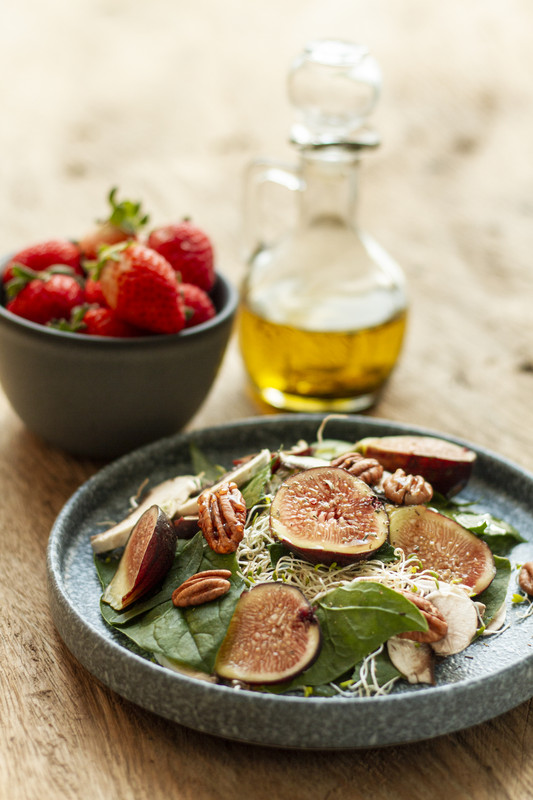
One of the things no one told me was how completely the food would change with the seasons when you buy from local producers. Summer meant tomatoes, aubergines, peppers, courgettes in such quantity that I learned five new ways to cook courgette. Autumn brought mushrooms and chestnuts and the pressing of the new olive oil, which arrived in Senhor António's recycled bottles and tasted like nothing I had ever called olive oil before. Winter is root vegetables, cabbages, the sturdy greens, the long-simmered soups that make sense in a way that only cold weather can justify. Spring is a revelation every year, they tell me — the first asparagus, the new onions, the strawberries that appear for three weeks and then are gone.
What one year in actually looks like
The short version: harder than the idealised version and better than the alternative. We have roots here now that did not exist a year ago — literal ones, in the case of the vegetable garden, and social ones in the case of the market and the neighbours and the local café where they know our order. We have a rhythm that belongs to this place rather than to any general idea of how life should work.
The valley looks the same from the kitchen window as it did on the first day. But I am different. I know now what the light does in each season, what the wild garlic smells like in spring, which fig tree gives the best fruit in late August, what the sky means before a thunderstorm. These are small things and they are also, I think, exactly the kinds of things a life is made of.