We came into Portugal in February and the cold came out of the house to meet us at the door. It took me weeks to understand that this was not bad luck, and longer to understand what else I had never thought to ask.
We arrived in the evening, at the end of three days of driving, and the cold came out of the house to meet us at the door.
Not the cold of a building that has stood empty and needs an hour to warm. A cold with movement in it, which took me a moment to place, because what I was feeling indoors was the weather.
I want to be careful with that house, because it was a mistake and we did not stay in it and it is not really the subject. February here was wet rather than freezing. Seven or eight degrees in the morning, which in Scotland is a mild day nobody comments on. What was waiting for me was not a cold country.
It was that I had moved to a warm one without ever once wondering how anybody stays warm in it.
One room
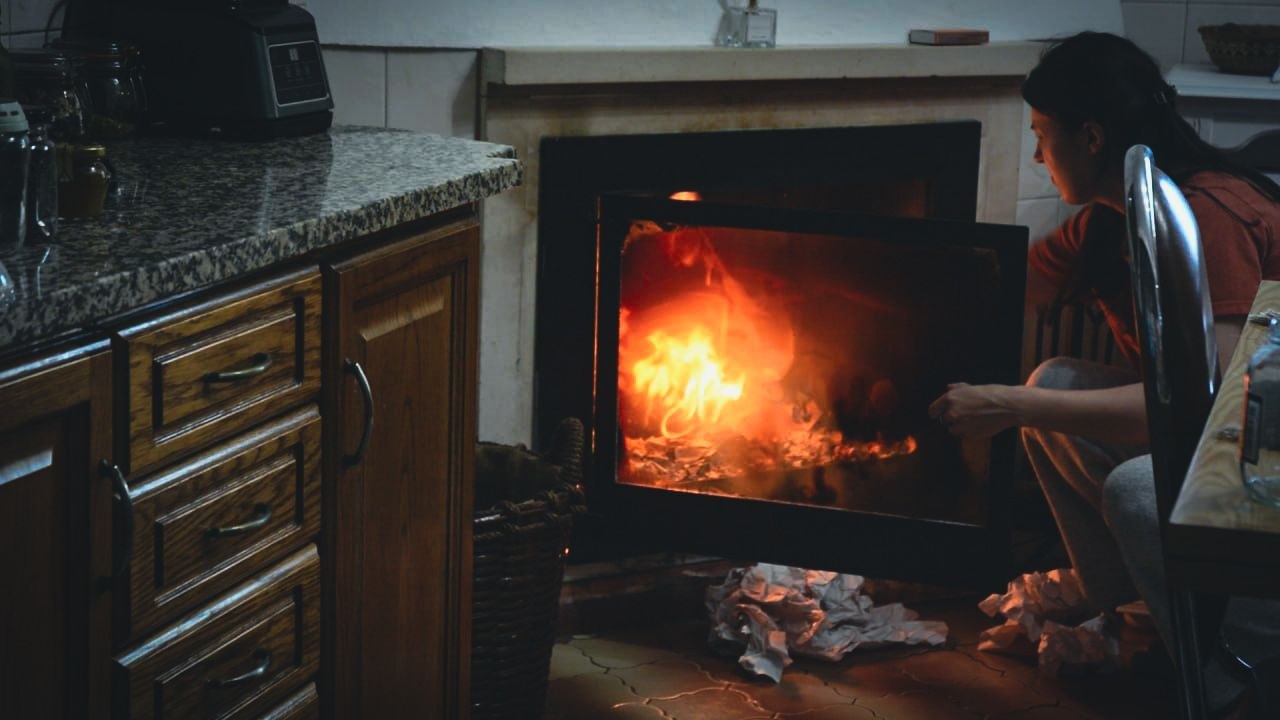
We heated one room that first stretch, the kitchen, with the fireplace in it.
Everybody came into that room anyway. The children and the food and the noise and the light all in the same place, and the rest of the house stayed cold, and it mattered considerably less than I would have predicted from a distance. I would put wood on after they had gone up and sit with it for a while before following them.
I have thought since about how much of my expectation of a house was really an expectation of being able to spread out in it. We were not living in the house. We were living in one warm room, in a country I had chosen partly for its light, in February, with the door shut.
It was not miserable. That is the part I would not have believed beforehand.
We were living in one warm room, in a country I had chosen partly for its light.
Everything I had not thought to ask
The cold is the example rather than the point.
I arrived here having done more research than most people do. I had read for years. I had been to this country before and I had lived in it before. And I had never once thought to ask how a Portuguese house is heated, because it had not occurred to me that the answer would be different, and nothing I read had told me otherwise.
That turned out to be the shape of the whole first stretch. Not difficulty, exactly. A steady procession of small, specific, ordinary things that everybody living here already knew and nobody had thought to write down, arriving in my life roughly a fortnight after the point at which knowing would have helped.
Some of them cost money. Some of them cost an afternoon in the wrong office. A few of them shaped how everything that followed went, and I did not find those in any guide. I found them from a woman at a desk mentioning something in passing, or from a neighbour, or by getting it wrong first.
They are not secrets. Nobody is keeping them from you. It is simply that people do not write down the things that are plainly true where they live, and so the version of a country that reaches you from outside it has all of the beauty in it and almost none of the ordinary knowledge.
People do not write down the things that are plainly true where they live.
The thing that actually settles you
What I did not expect is that this stage is also where the country stops being a place you admire.
It was February and our units were not fitted and we were burning through what wood there was, and wood began to appear at the house. Nobody discussed it with us. Somebody had looked at our chimney and drawn the correct conclusion.
I had not asked for it. I would not have known how to ask for it. And my instinct, which comes from where I come from, was to decline politely and insist on paying, and I have since come to understand that this instinct is the single worst thing you can bring here. Declining is not modesty. It is a refusal of the relationship, and the relationship is what you have actually moved for, even if you do not know it yet.
So we took the wood, and said thank you badly in bad Portuguese, and I began the much harder business of working out how anything gets sent back.
That is still going on. It takes up a small part of most weeks, the arithmetic of it, what we have that they do not grow, what would be too much, how long to let pass so that it is not a transaction. I get it wrong fairly often, and I am told gently, by people who would never use the word, that I am getting better at it.
Where it ends
We are through the worst of the first stretch now. The units are on the walls. I have learned what February wood costs by paying it, which is why I will be buying in July.
There is no moment when it happens. Nobody tells you that you have stopped being the person who does not know. It arrives the way the heat arrives in these houses, from underneath and with no particular hour attached to it, and by the time you notice, it has been true for a while.
But in that first February, I would have paid a great deal for somebody to have sat me down and told me what everybody here already knew.
← Back to Journal What Actually Goes Wrong When You Move Abroad →