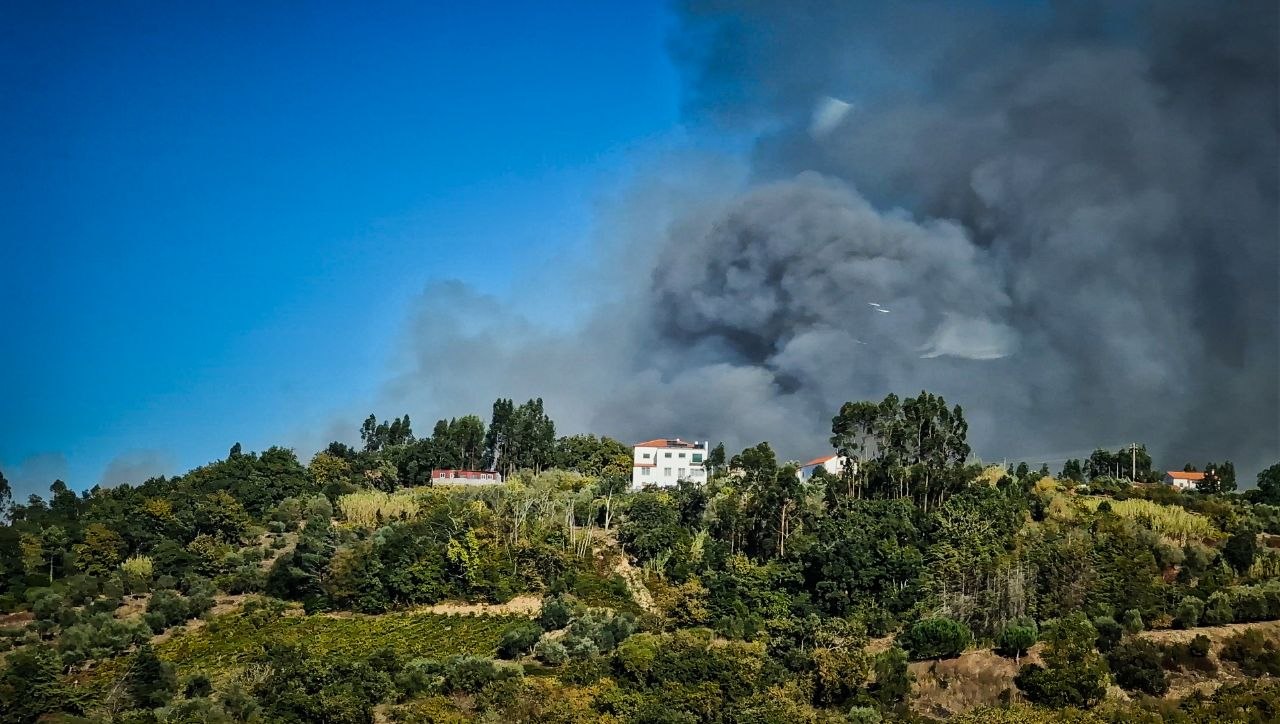
If there is forest near your Portuguese home, you must clear a 50-metre band every year, and the law applies to tenants, not just owners. Here is what it means.
Do you have to clear land in Portugal, even as a renter?
Yes. If there is forest within fifty metres of your house in Portugal, someone is legally required to clear a band of vegetation around the building every year and the law places that duty on tenants, not only owners. If you are renting a house with ground around it, this can quietly become your responsibility, with fines if the work is not done by the annual deadline.
This is one of the things that genuinely surprised us, and it is almost never mentioned in the guides that tell you Portugal is cheap and sunny. So here is the honest version.
The word to notice is "tenants"
I will be honest about the limits of what I can tell you. I have not fought a fire and I will not write as though I have. What I can set out is the part of the season that is administrative, and that arrives every year whether or not anything ever burns.
The obligation comes from a 2021 law that created the integrated rural fire management system. What matters for someone arriving here is who it falls on. It falls on owners, tenants, usufructuaries, and anyone else holding land. The word tenants is the one to notice, because it is the one that catches people out.
Most of us arrive assuming that anything to do with the structure of the land is the landlord's problem. Here, the law does not assume that. So if you are renting a house with any ground around it, the single most useful thing you can do is establish in the contract, before you sign, whose job this clearing is. Put it in writing. Do not leave it as a friendly assumption, because a friendly assumption is worth nothing when the deadline arrives and the fine is addressed to whoever is living there.
What the rule actually asks for
The shape of it is a fifty-metre band of managed vegetation, measured out from the outer wall of the building, where that band falls on forest land. Where it falls on agricultural land it is ten metres. Within the band, branches are cleared to four metres above the ground, and trees are kept four metres apart, rising to ten metres apart for pines and eucalyptus.
Newer technical standards set the detail by distance from the house. Clean or paved ground within two metres of the walls, with nothing growing against them. Spacing and pruning rules from two to ten metres. And from ten to fifty metres, reaching a hundred in some situations — reduced scrub, broken-up vegetation, and all the cuttings taken away rather than left in a pile.
One thing to check before you cut anything: the species matters. Cork oak and holm oak need prior authorisation to cut, and wild holly may not be cut at all. It is entirely possible to create a second problem for yourself by clearing enthusiastically and removing a protected tree.
The deadline moves every year
There is no fixed date to memorise, because the deadline is set and published each year. In 2026 it was the end of May, extended in some councils to the end of June where a declaration of calamity was in place after the winter storms made the work impossible to finish on time.
That is the pattern to expect: a deadline in late spring, sometimes moved, always announced. The practical habit is to find out your council's date early in the year rather than discover it in June.
Fire rules, distances and deadlines here are set by law and revised, and the details above were current in 2026. Confirm the current standard and your council's deadline with the official sources and your own câmara before you rely on it.
This is one small piece of the year as it actually runs here — the calendar of quiet obligations nobody hands you when you arrive. The whole of it, stage by stage, with what each thing cost us, is in the book: Moving to Portugal: The Honest Version. Our real road, not another guide.
https://aterraliberty.com/book
← Back to Journal Is Creche Free in Portugal? Yes - Here's How (2026) →