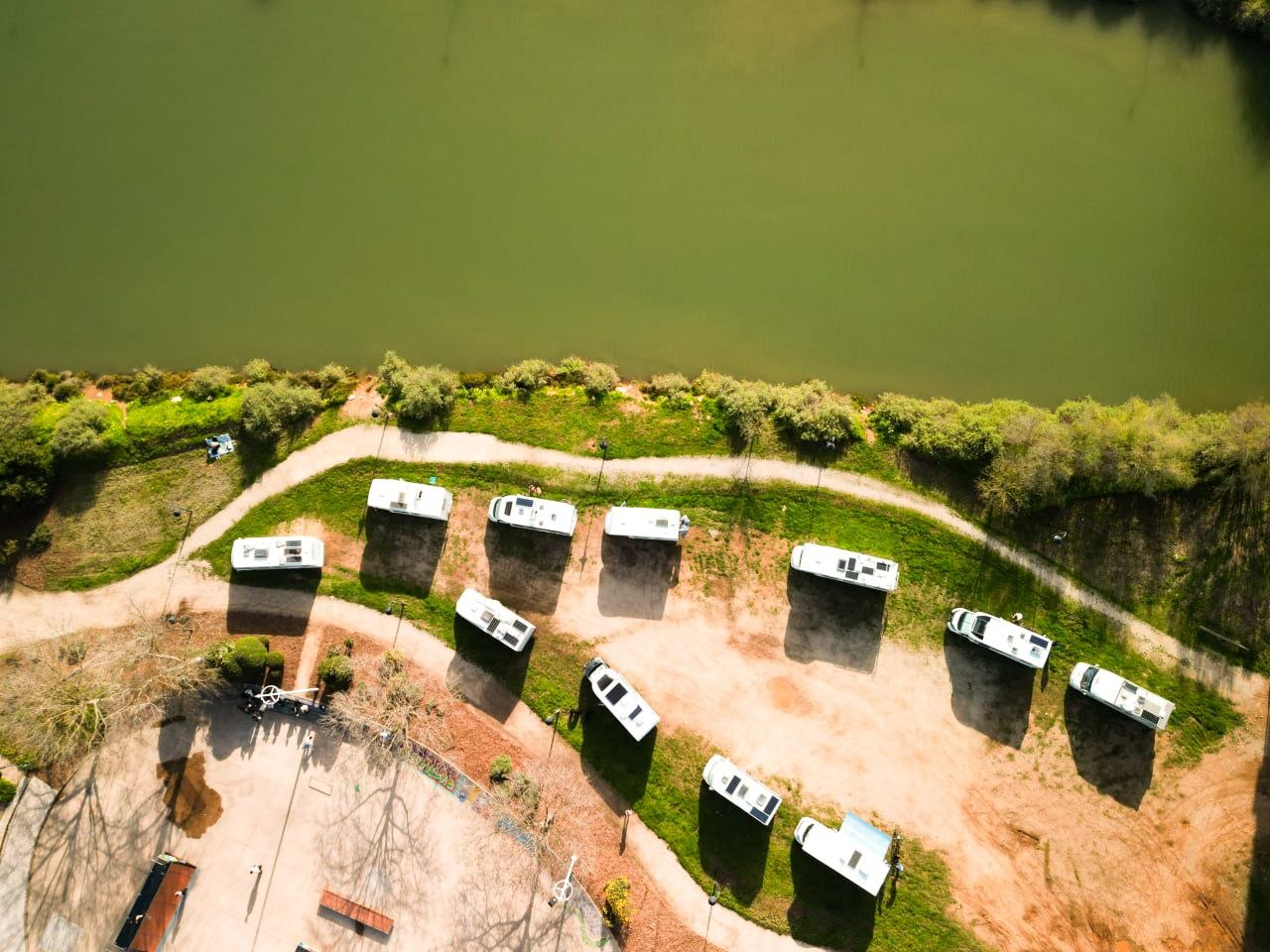
We lived in a motorhome for two years and three months. We drove through seventeen countries. We woke up beside the Atlantic, in alpine meadows, in city car parks at two in the morning when we ran out of road. We learned how to live in twenty-three square metres with another person, which is an education in negotiation, in tolerance, in the discovery of which of your habits are actually important to you and which ones you performed only because the space existed to perform them in.
Why we did it
The decision to sell our flat, put what we could not sell into storage, and buy a motorhome was not impulsive, but it was not entirely rational either. We had been talking about it for two years before we actually did it, the way you talk about something that feels too large and too risky to actually attempt. And then there was a moment when the cost of not doing it became larger, in our reckoning, than the cost of doing it.
I do not know how to convey that moment to someone who has not had it. It is the point at which you stop seeing safety as the default and start seeing it as its own kind of risk, the risk of the unlived life, which is substantial and almost completely ignored in conversations about risk.
What the road taught us
The first thing it taught us is that most of what we owned was not necessary. We packed what we thought we needed, and within three months we had sent two boxes back and given away another bag of things in a campsite in southern France. The space became lighter. We became lighter. There is a freedom in owning fewer things that is very difficult to access while you are still surrounded by things, but once you have experienced it, it is genuinely hard to go back.
The second thing it taught us is that where you are matters less than how you are. We drove to beautiful places and were too stressed or too tired to see them properly. We parked in unpromising industrial outskirts and had the most interesting conversations of the trip. The quality of a day is almost entirely a function of your internal state, not your location. This sounds obvious in retrospect. It was not obvious to us before.
The quality of a day is almost entirely a function of your internal state, not your location.
The slow discovery of Portugal
We entered Portugal for the first time in the autumn of our first year, driving down from Salamanca on a grey day that turned gold as we crossed the border. I remember noticing the light change, or thinking I noticed it, which amounts to the same thing at that kind of moment. We spent six weeks there on that first visit. We did not plan to stay that long.
What kept us was not one thing but an accumulation of things. The landscape, the cork oaks, the schist villages, the wide river valleys. The cost of living, which made the remaining money last longer and the margin for staying wider. The attitude of the people, who seemed neither hostile nor performatively welcoming, just present in a way that felt sustainable. And the food, which I have written about elsewhere and which is simply better than most food we encountered anywhere else on that trip.
Why we stopped moving
Nomadic life has a texture that is difficult to describe to people who have not tried it. At its best, it is a state of permanent openness, every morning could be anywhere, every encounter is genuinely new. At its worst, it is a state of permanent instability, which is exhausting in ways that accumulate slowly and are not immediately visible.
After two years, we were tired. Not of travelling exactly, but of not having a place that was ours. We wanted to plant something and see it grow. We wanted neighbours we would see again. We wanted to stop optimising the logistics of existence and start simply existing.
Portugal, and specifically this piece of Central Portugal, was where we wanted to stop. That decision was made somewhere on a Wednesday afternoon at a picnic table outside the motorhome, overlooking a valley we are now fortunate enough to look at every morning. We did not agonise over it. We looked at each other and said yes, and that was that.
What it distilled down to
Two years on the road across seventeen countries, and the clearest thing it gave us was this: the life you are living is a choice, even when it does not feel like one. The walls you accept as permanent are mostly not. The distance between where you are and where you want to be is frequently smaller than the distance feels. The doing of the thing is almost always less frightening than the imagining of it.
That is what the motorhome taught us. Portugal is where we put it into practice.